Why do all AI sites look the same?
Why AI websites all look the same (and why that’s a problem)
You may have been nudged by a friend who launched a site in an afternoon. You may be watching budgets more carefully. Or you may simply enjoy keeping up with the latest tools and trends. AI promises speed, efficiency and the reassuring feeling that you’re not being left behind.
All of that is understandable.
But before clicking ‘generate’, it’s worth pausing to ask what you actually need your website to do.
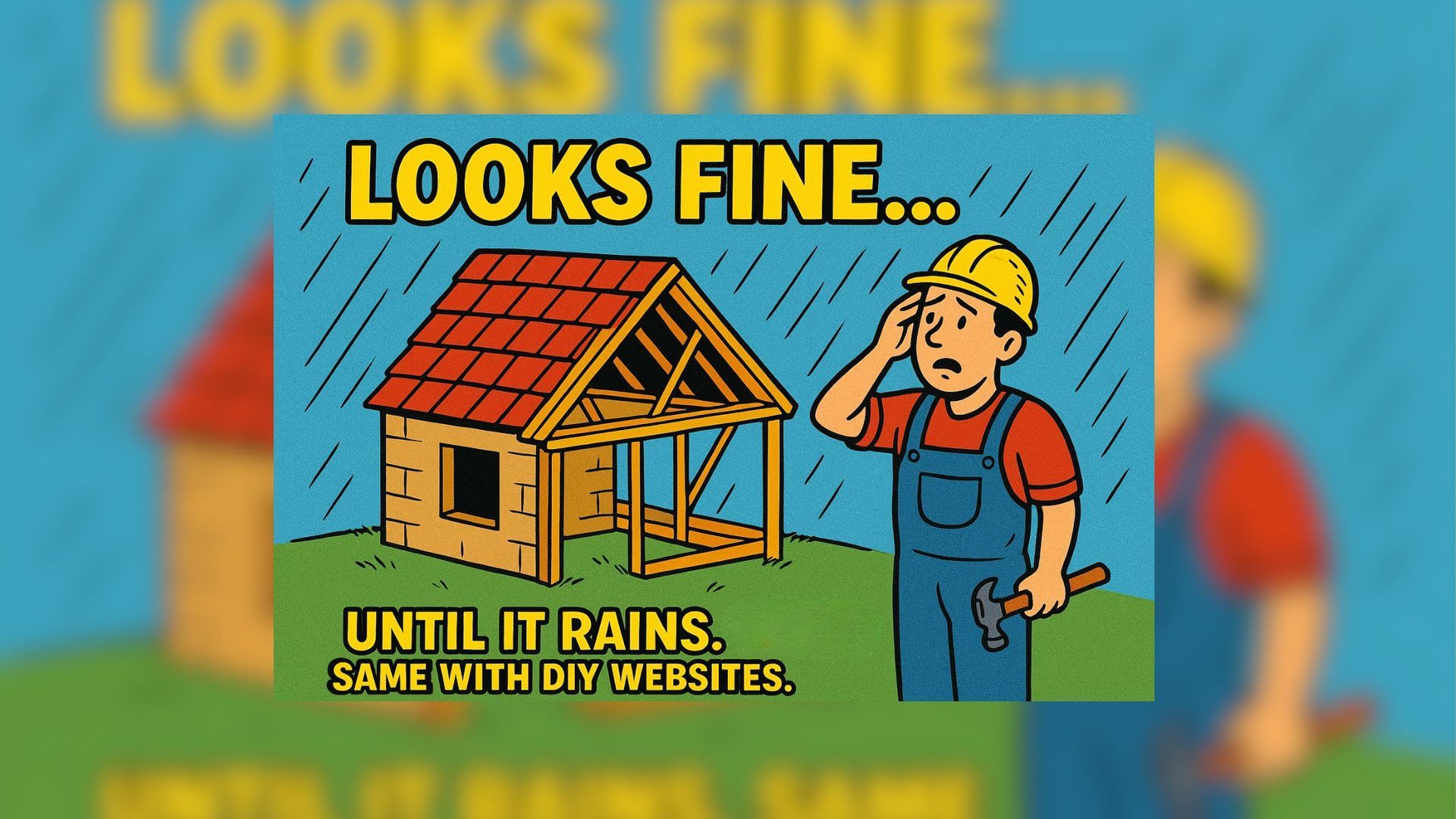
Because a website isn’t just something that exists. It needs to be robust. It needs to be findable. And it needs to work long after the initial excitement of a fast build has worn off.
Spend five minutes browsing newly launched websites and you’ll start to notice a pattern.
Black background. White text. A splash of colourful gradient in the headline. Floating icons. Abstract graphics. Big claims. Very little substance.
They look polished. They look modern. And increasingly, they look exactly like each other.
These are AI-built websites, and they’re becoming instantly recognisable.
The rise of the “AI stylish” website
AI website builders are fast, impressive, and genuinely useful tools. In minutes, they can produce a fully formed site with metadata, schema markup, alt tags, responsive layouts and a technically sound structure.
On paper, that sounds like the job done.
But design is not the same as communication.
What AI produces is a statistically safe average of what it has seen before - and right now, that average leans heavily towards a specific SaaS-style aesthetic. Dark, high-contrast, minimalist and emotionally neutral.
It isn’t making creative judgements. It’s repeating patterns.
Why they all look the same
AI doesn’t design the way humans do. It doesn’t begin with your business, your customers or your personality. It begins with data.
Most of that data comes from funded startups, SaaS products and software companies - the very spaces where speed, innovation and being seen as ‘ahead of the curve’ are culturally rewarded. It’s no surprise that many marketers and tech teams have embraced these tools enthusiastically.
The result is a wave of sites built quickly, proudly and with the best intentions - but all drawing from the same visual and structural playbook. What initially feels innovative starts to look familiar very fast.
Safety, speed and trend-awareness are prioritised over specificity. The site looks modern, but it isn’t really speaking to anyone in particular.
The copy problem: words without weight
This is where many AI-built sites quietly fall apart.
The copy is rarely incorrect, but it’s almost never felt. It leans on familiar phrases that sound professional and confident, but don’t reveal any real understanding of the reader.
There’s no opinion, no prioritisation and no sense of what actually matters most to the customer. So the design has to work harder, using visual flair to compensate for words that carry very little weight.
Technical perfection, emotional emptiness
AI sites often arrive with strong technical foundations. SEO basics are in place, heading structures are tidy, contrast levels are accessible and performance is generally solid.
But optimisation without meaning is hollow.
Alt tags may describe images accurately, but not emotionally. Metadata exists, but doesn’t entice. The structure is there, but the story is missing.
As users and search engines get smarter, sites that feel generic don’t just blend in. They quietly disappear.
The real risk: they will date very quickly
Design trends move fast.
When thousands of businesses launch near-identical AI-generated sites, that look stops feeling modern and starts feeling tired. What initially signals ‘up to date’ quickly becomes a marker of when the site was built.
Without deeper brand thinking underneath, there’s nothing to carry the site forward once the trend passes.
There’s also a more practical risk that’s easy to overlook. Many AI-built sites are tied tightly to the platform that generated them. Some produce abstracted code you’ll never touch. Others lock you into a young SaaS product that may change direction, pricing - or disappear - within months.
What feels like freedom at the start can quickly become dependency.
The comforting illusion: “I’ve got a site, job done”
AI has introduced a tempting mindset: build fast, tick the box, move on.
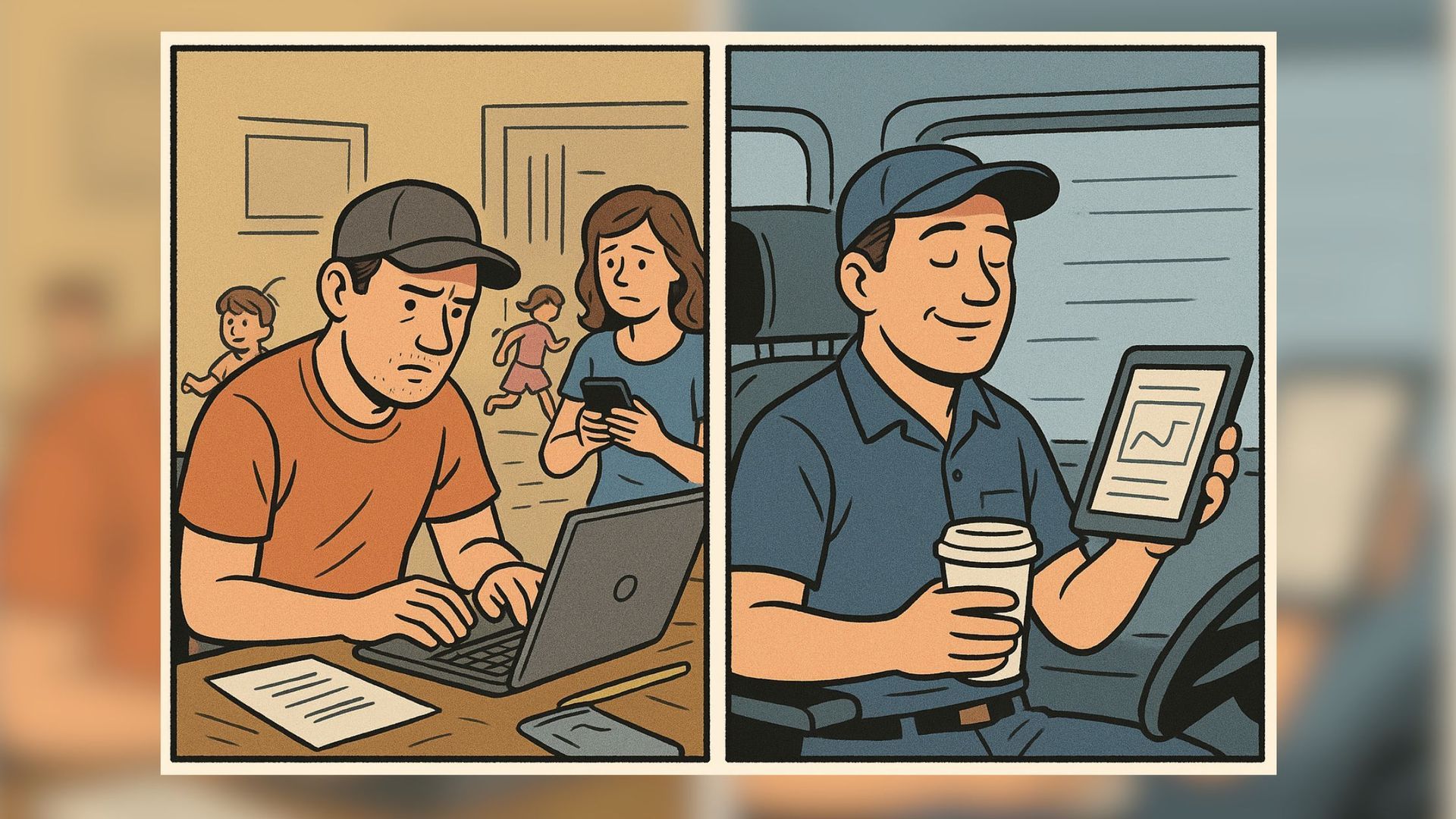
But a website isn’t a checkbox exercise. As your business grows, your site needs to grow with it. That means making changes confidently, not hoping nothing breaks when you click ‘edit’.
If you go fully DIY, you also take on questions most people don’t realise they’re signing up for:
- Will you know how to make structural changes later?
- Can you add integrations, ecommerce or booking tools when you need them?
- Do you know how to access and interpret analytics?
- Who fixes bugs, performance issues or security problems?
- Are you comfortable managing domains, DNS, hosting and backend admin?
What looks like a shortcut to a functioning site can turn into a series of hurdles just as you’re trying to build momentum.
That doesn’t come from prompts or presets. It comes from experience.
What experience brings that AI can’t
A good web designer isn’t simply arranging sections on a page.
They bring business context, an understanding of buyer behaviour and hard-won insight into what actually drives enquiries. They know when to simplify, when to hold back and when clarity matters more than looking clever.
AI is excellent at execution. Human judgement is what turns execution into something valuable.
So what’s actually better?
A website that looks like everyone else, or one that genuinely reflects you?
A site that talks at people, or one that understands their concerns before they’ve voiced them?
Because most visitors aren’t looking for a stylish website. They’re looking for reassurance, clarity and a sense that they’ve found the right business.
That comes from thoughtful design, considered copy and human insight.
Final thought
AI is a powerful tool, and used well it can support good work.
But when everyone uses it in the same way, the outcome isn’t innovation. It’s noise.
The brands that stand out in that noise will be the ones that still sound human - and feel like they were built with intent, not speed.
Ready to chat?