AI in art, where to stop and where to start
AI, Art, and the bit where the magic breaks
AI is everywhere now.
Search, work, warfare, creativity. It’s not knocking at the door - it’s already made a cup of tea and rearranged the furniture. And no, I’m not anti-AI. I use it. I want to make that clear from the start.
I use AI like I use a calculator, a thesaurus, or a reference book. It helps. It speeds things up. It takes care of the boring bits. But it doesn’t decide. It doesn’t lead. And it definitely doesn’t get the final say.
I don’t design websites using AI. Partly because I genuinely enjoy what I do - talking to people, understanding their business, finding the personality, the quirks, the rhythm. That human stuff matters.
AI helps me sense-check ideas, pull stats (which I always verify), or generate FAQ prompts so my brain is free for the good bits. AI is a tool. Not the author.
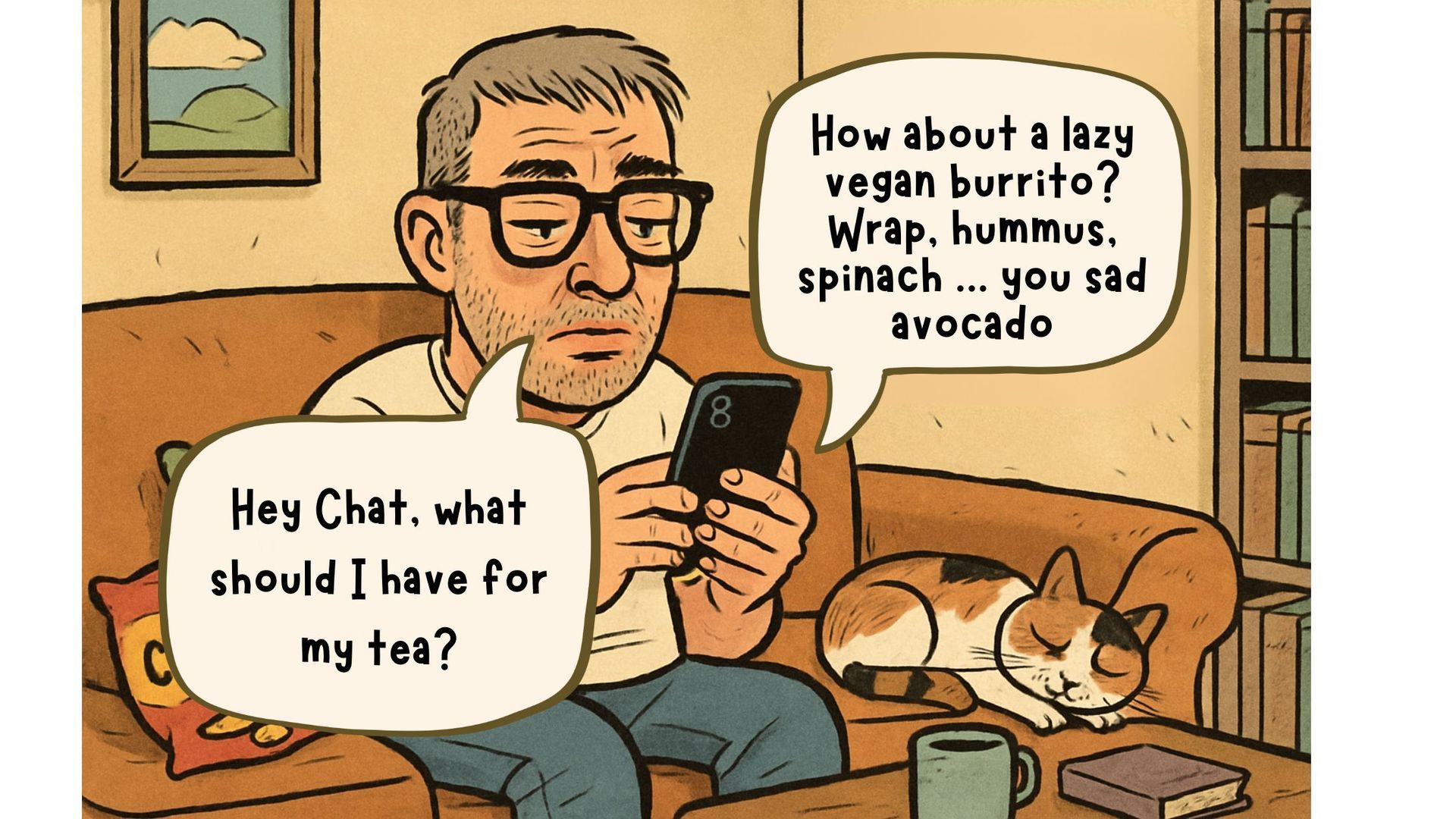
What does worry me is the growing “AI first” mentality. Companies asking, “Can AI do this?” before asking a human to think. Before hiring. Before trusting experience. We’ve all seen the memes:
“ChatGPT, should I turn left or right?”
“Tea or coffee?”
“Do I like this person?”
“Should I breathe?”
It’s funny - but it’s also revealing. We love shortcuts. We crave validation. Sometimes we’re just… lazy.
And while laziness has its place, outsourcing thinking is how you end up with everyone producing the same beige output.
And here’s something I’m really starting to notice: AI has a rhythm. A pattern. A cadence. Once you hear it, you can’t unhear it. Scripts that sound suspiciously polished but oddly hollow. Writing that technically works but breaks the magic. It’s like watching a film where every scene hits the beat but none of them land emotionally.
I play in a band. Writing music is hard. It’s frustrating. You doubt yourself. You throw things away. You come back to it. And that discomfort is part of the process. I’m not saying artists need to suffer for their art, but a little friction is healthy. It means you’re actually making something.
Now I’m bombarded with, “Write a whole song with AI using just a chord progression.”
Where’s the fun in that?
That’s worse than sitting in a room full of producers and Ed Sheeran writing a pop song by numbers. At least in that room there’s still a pulse. A disagreement. A human moment.
And this is where AI conversations often get stuck. People become understandably defensive.
The tone shifts to hard no. 'This is all wrong. There’s no place for AI here!'.
But that defensiveness can accidentally undermine the very talent people are trying to protect.
A stronger position is confidence.
'Look what I can do without AI'.
And if I choose to use it, I’ll use it to make me better - not to replace the thinking, the taste, or the craft.
This isn’t theoretical either. AI-generated music is already creeping into local radio slots - the traditional stepping stones for new artists. People discover “bands” online now and don’t even realise they don’t exist. No gigs. No rehearsal rooms. No bad soundchecks. Just a neat stack of ones and zeros. A kind of Skynet one-man band.
AI can produce good output. Not always. Sometimes it’s a bit off. But “off” can be interesting. Bowie and Burroughs literally cut words up to spark new ideas. AI can do something similar - not as an artist, but as a provocation. A nudge. A different direction.
AI isn’t going back in the box. The smart response isn’t fear or blind adoption - it’s discernment.
Use it where it makes sense. Ignore it where it doesn’t. Keep humans in charge of taste, judgment, personality, and soul.
AI is a tool.
Art is still human.
And that’s where the magic lives.
One last thing…
Yes - I used AI to generate the image for this blog.
Ironically, AI doesn’t quite understand the idea of cut-ups and laptops. And is that really William S. Burroughs? He looks far too healthy. Also, it feels less like radical literary experimentation and more like a cosy craft night in for the pair of them.
Which, honestly, kind of proves the point.
AI is brilliant at approximating ideas, aesthetics, and references - but it smooths the edges. It sanitises the chaos. The human bit is still doing the interpreting, the judging, the laughing, and deciding whether something actually feels right.
Tool used. Brain engaged.
As it should be.