Danny James • June 29, 2022

So What's SEO, Anyway?

What is SEO Anyway? Unpacking the Mystery of Search Engine Optimization


Understanding SEO: Beyond the Basics

If you’re a business owner with an online presence, chances are you’ve heard the term “SEO” thrown around a lot. Maybe you've even received emails claiming that your website "looks great but isn't being found on Google." These emails are often spammy and can be safely ignored, but they touch on a common concern: visibility. While many people understand SEO as a way to get their website to the "top of Google," the reality is that SEO, or Search Engine Optimization, is much more complex and nuanced than just ranking high on search engines.


The Essence of SEO: People First

At its core, SEO is about making your website work well for people. It’s easy to get caught up in the technical aspects and algorithms, but ultimately, SEO aims to improve user experience. A well-optimized site meets the needs of visitors by providing relevant information, easy navigation, and a pleasant browsing experience. When users find what they’re looking for quickly and efficiently, they’re more likely to stay on your site, engage with your content, and convert into customers.

Search engines like Google prioritize user experience. They use sophisticated algorithms to evaluate and rank websites based on how well they serve their visitors. This means that focusing on people first – by creating valuable content, ensuring your site is easy to navigate, and making sure it loads quickly – is a fundamental aspect of SEO. The more user-friendly your site is, the better it will perform in search engine rankings.

The Technical Side of SEO: Fun for Geeks, Daunting for Others


While the human aspect of SEO is vital, there's also a significant technical component that can't be ignored. Technical SEO involves optimizing your website's infrastructure so search engines can easily crawl and index your content. For many business owners, the technical side of SEO can seem overwhelming, but for SEO enthusiasts, it’s a fascinating puzzle to solve. Here’s a starter list of technical SEO checks that are essential for any website:

  1. Site Speed: Ensure your website loads quickly. Slow sites frustrate users and are penalized by search engines.
  2. Mobile-Friendliness: Your site should be easily accessible and navigable on mobile devices.
  3. Secure Sockets Layer (SSL): Implement HTTPS to secure your website and protect user data.
  4. Crawl Errors: Use tools like Google Search Console to identify and fix errors that prevent search engines from indexing your site.
  5. XML Sitemap: Create and submit an XML sitemap to help search engines understand your site structure.
  6. Robots.txt: Optimize your robots.txt file to control how search engines crawl your site.
  7. Canonical Tags: Use canonical tags to prevent duplicate content issues.
  8. Structured Data: Implement schema markup to help search engines understand your content and provide rich results.
  9. Meta Tags: Optimize title tags and meta descriptions to improve click-through rates from search engine results pages.
  10. Broken Links: Regularly check for and fix broken links to ensure a smooth user experience.

These technical elements, while often overlooked by non-specialists, play a crucial role in ensuring that your website is both user-friendly and search engine-friendly.


Conclusion: Balancing User Experience and Technical Excellence

SEO is about much more than just a beautiful website or appearing at the top of search engine results. It’s a comprehensive strategy that involves both understanding and serving the needs of your visitors while also adhering to the technical requirements set by search engines. At its simplest, SEO is about making your site work well for users – because when people have a positive experience on your site, search engines take notice and reward you with higher rankings.

We might feel bound by the whims of Google’s ever-changing algorithms, but the golden rule remains: put humans first. By focusing on creating valuable, user-centric content and maintaining a technically sound website, you can achieve lasting SEO success. Remember, a great SEO strategy is not just about pleasing the algorithms; it’s about providing a seamless, enjoyable experience for your visitors. When you get that right, the search rankings will follow.

By Danny James January 16, 2026
AI, Art, and the bit where the magic breaks AI is everywhere now. Search, work, warfare, creativity. It’s not knocking at the door - it’s already made a cup of tea and rearranged the furniture. And no, I’m not anti-AI. I use it. I want to make that clear from the start. I use AI like I use a calculator, a thesaurus, or a reference book. It helps. It speeds things up. It takes care of the boring bits. But it doesn’t decide. It doesn’t lead. And it definitely doesn’t get the final say. I don’t design websites using AI. Partly because I genuinely enjoy what I do - talking to people, understanding their business, finding the personality, the quirks, the rhythm. That human stuff matters. AI helps me sense-check ideas, pull stats (which I always verify), or generate FAQ prompts so my brain is free for the good bits. AI is a tool. Not the author. What does worry me is the growing “AI first” mentality. Companies asking, “Can AI do this?” before asking a human to think. Before hiring. Before trusting experience. We’ve all seen the memes: “ChatGPT, should I turn left or right?” “Tea or coffee?” “Do I like this person?” “Should I breathe?” It’s funny - but it’s also revealing. We love shortcuts. We crave validation. Sometimes we’re just… lazy. And while laziness has its place, outsourcing thinking is how you end up with everyone producing the same beige output. And here’s something I’m really starting to notice: AI has a rhythm. A pattern. A cadence. Once you hear it, you can’t unhear it. Scripts that sound suspiciously polished but oddly hollow. Writing that technically works but breaks the magic. It’s like watching a film where every scene hits the beat but none of them land emotionally. I play in a band. Writing music is hard. It’s frustrating. You doubt yourself. You throw things away. You come back to it. And that discomfort is part of the process. I’m not saying artists need to suffer for their art, but a little friction is healthy. It means you’re actually making something. Now I’m bombarded with, “Write a whole song with AI using just a chord progression.” Where’s the fun in that? That’s worse than sitting in a room full of producers and Ed Sheeran writing a pop song by numbers. At least in that room there’s still a pulse. A disagreement. A human moment. And this is where AI conversations often get stuck. People become understandably defensive. The tone shifts to hard no. ' This is all wrong. There’s no place for AI here! '. But that defensiveness can accidentally undermine the very talent people are trying to protect. A stronger position is confidence. ' Look what I can do without AI '. And if I choose to use it, I’ll use it to make me better - not to replace the thinking, the taste, or the craft. This isn’t theoretical either. AI-generated music is already creeping into local radio slots - the traditional stepping stones for new artists. People discover “bands” online now and don’t even realise they don’t exist. No gigs. No rehearsal rooms. No bad soundchecks. Just a neat stack of ones and zeros. A kind of Skynet one-man band. AI can produce good output. Not always. Sometimes it’s a bit off. But “off” can be interesting. Bowie and Burroughs literally cut words up to spark new ideas. AI can do something similar - not as an artist, but as a provocation. A nudge. A different direction. AI isn’t going back in the box. The smart response isn’t fear or blind adoption - it’s discernment. Use it where it makes sense. Ignore it where it doesn’t. Keep humans in charge of taste, judgment, personality, and soul.  AI is a tool. Art is still human. And that’s where the magic lives. One last thing… Yes - I used AI to generate the image for this blog. Ironically, AI doesn’t quite understand the idea of cut-ups and laptops. And is that really William S. Burroughs? He looks far too healthy. Also, it feels less like radical literary experimentation and more like a cosy craft night in for the pair of them. Which, honestly, kind of proves the point. AI is brilliant at approximating ideas, aesthetics, and references - but it smooths the edges. It sanitises the chaos. The human bit is still doing the interpreting, the judging, the laughing, and deciding whether something actually feels right. Tool used. Brain engaged. As it should be.
By Danny James January 9, 2026
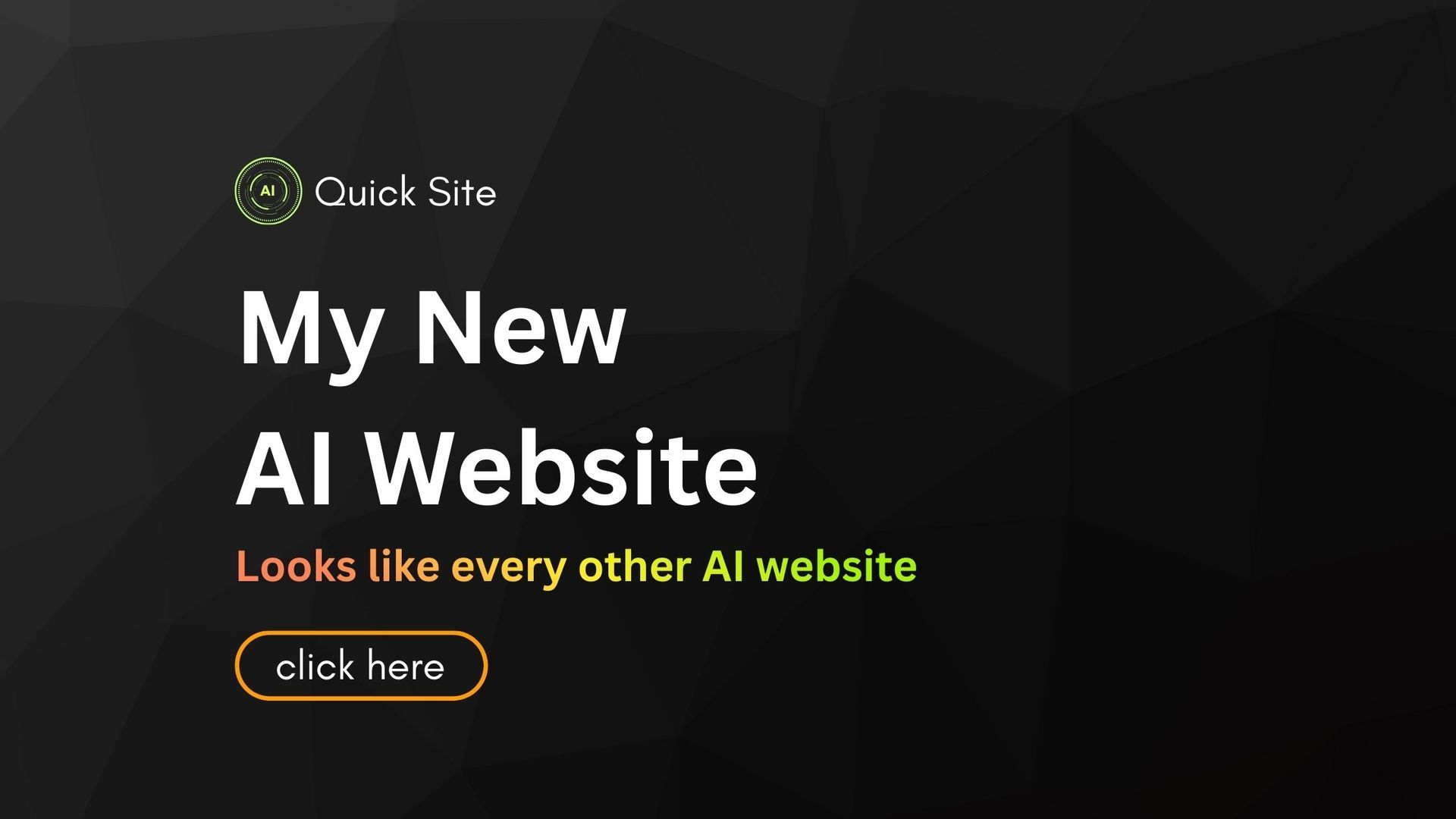
Why AI websites all look the same (and why that’s a problem) You may have been nudged by a friend who launched a site in an afternoon. You may be watching budgets more carefully. Or you may simply enjoy keeping up with the latest tools and trends. AI promises speed, efficiency and the reassuring feeling that you’re not being left behind. All of that is understandable. But before clicking ‘generate’, it’s worth pausing to ask what you actually need your website to do. Because a website isn’t just something that exists. It needs to be robust. It needs to be findable. And it needs to work long after the initial excitement of a fast build has worn off. Spend five minutes browsing newly launched websites and you’ll start to notice a pattern. Black background. White text. A splash of colourful gradient in the headline. Floating icons. Abstract graphics. Big claims. Very little substance. They look polished. They look modern. And increasingly, they look exactly like each other. These are AI-built websites, and they’re becoming instantly recognisable. The rise of the “AI stylish” website AI website builders are fast, impressive, and genuinely useful tools. In minutes, they can produce a fully formed site with metadata, schema markup, alt tags, responsive layouts and a technically sound structure. On paper, that sounds like the job done. But design is not the same as communication. What AI produces is a statistically safe average of what it has seen before - and right now, that average leans heavily towards a specific SaaS-style aesthetic. Dark, high-contrast, minimalist and emotionally neutral. It isn’t making creative judgements. It’s repeating patterns. Why they all look the same AI doesn’t design the way humans do. It doesn’t begin with your business, your customers or your personality. It begins with data. Most of that data comes from funded startups, SaaS products and software companies - the very spaces where speed, innovation and being seen as ‘ahead of the curve’ are culturally rewarded. It’s no surprise that many marketers and tech teams have embraced these tools enthusiastically. The result is a wave of sites built quickly, proudly and with the best intentions - but all drawing from the same visual and structural playbook. What initially feels innovative starts to look familiar very fast. Safety, speed and trend-awareness are prioritised over specificity. The site looks modern, but it isn’t really speaking to anyone in particular. The copy problem: words without weight This is where many AI-built sites quietly fall apart. The copy is rarely incorrect, but it’s almost never felt. It leans on familiar phrases that sound professional and confident, but don’t reveal any real understanding of the reader. There’s no opinion, no prioritisation and no sense of what actually matters most to the customer. So the design has to work harder, using visual flair to compensate for words that carry very little weight. Technical perfection, emotional emptiness AI sites often arrive with strong technical foundations. SEO basics are in place, heading structures are tidy, contrast levels are accessible and performance is generally solid. But optimisation without meaning is hollow. Alt tags may describe images accurately, but not emotionally. Metadata exists, but doesn’t entice. The structure is there, but the story is missing. As users and search engines get smarter, sites that feel generic don’t just blend in. They quietly disappear. The real risk: they will date very quickly Design trends move fast. When thousands of businesses launch near-identical AI-generated sites, that look stops feeling modern and starts feeling tired. What initially signals ‘up to date’ quickly becomes a marker of when the site was built. Without deeper brand thinking underneath, there’s nothing to carry the site forward once the trend passes. There’s also a more practical risk that’s easy to overlook. Many AI-built sites are tied tightly to the platform that generated them. Some produce abstracted code you’ll never touch. Others lock you into a young SaaS product that may change direction, pricing - or disappear - within months. What feels like freedom at the start can quickly become dependency. The comforting illusion: “I’ve got a site, job done” AI has introduced a tempting mindset: build fast, tick the box, move on. But a website isn’t a checkbox exercise. As your business grows, your site needs to grow with it. That means making changes confidently, not hoping nothing breaks when you click ‘edit’. If you go fully DIY, you also take on questions most people don’t realise they’re signing up for: Will you know how to make structural changes later? Can you add integrations, ecommerce or booking tools when you need them? Do you know how to access and interpret analytics? Who fixes bugs, performance issues or security problems? Are you comfortable managing domains, DNS, hosting and backend admin? What looks like a shortcut to a functioning site can turn into a series of hurdles just as you’re trying to build momentum.  That doesn’t come from prompts or presets. It comes from experience. What experience brings that AI can’t A good web designer isn’t simply arranging sections on a page. They bring business context, an understanding of buyer behaviour and hard-won insight into what actually drives enquiries. They know when to simplify, when to hold back and when clarity matters more than looking clever. AI is excellent at execution. Human judgement is what turns execution into something valuable. So what’s actually better? A website that looks like everyone else, or one that genuinely reflects you? A site that talks at people, or one that understands their concerns before they’ve voiced them? Because most visitors aren’t looking for a stylish website. They’re looking for reassurance, clarity and a sense that they’ve found the right business. That comes from thoughtful design, considered copy and human insight. Final thought AI is a powerful tool, and used well it can support good work. But when everyone uses it in the same way, the outcome isn’t innovation. It’s noise. The brands that stand out in that noise will be the ones that still sound human - and feel like they were built with intent, not speed. Ready to chat?
By Danny James October 1, 2025
Just launched your small business website? Discover practical, low-budget strategies to boost your SEO, get noticed on Google, and attract more local customers — no marketing degree required.
By Danny James September 29, 2025
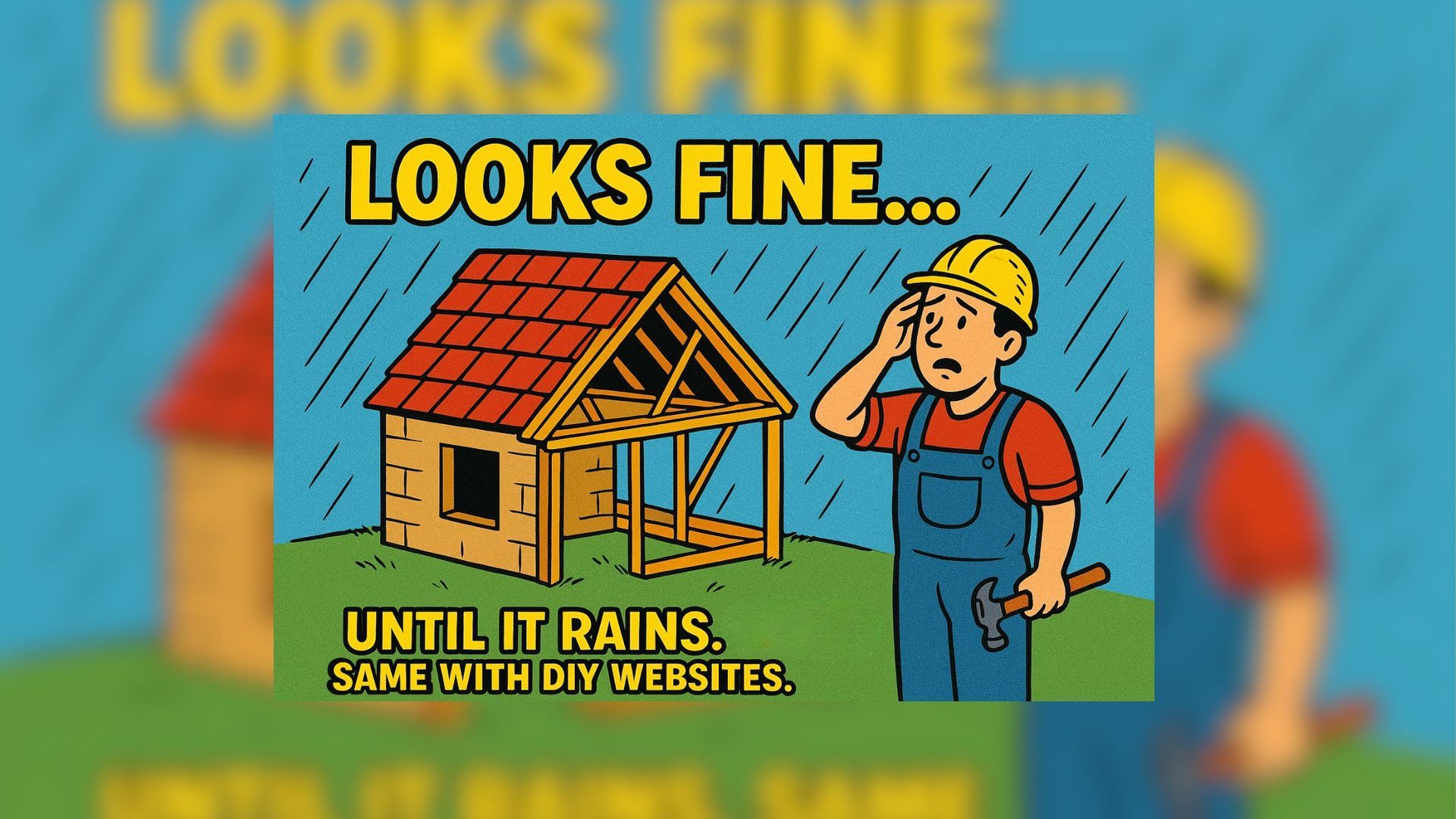
Why you need to be using ChatGPT to build your own website … And why you probably shouldn’t Everyone’s talking about building websites with ChatGPT these days. Fast, cheap, and apparently magical - your mate “who knows a bit of IT” can do it for you on the weekend, right? Or your cousin the coder said they’d knock it up after their day job. Brilliant! What could possibly go wrong? Truth is ... quite a lot. The illusion of easy AI makes it look effortless. A few prompts here, a copy-paste there, and hey presto - a “professional” website. But once it's all done and you check the performance? It might look fine on your laptop … maybe. On a phone? Forget it. Buttons vanish, text overlaps, images stretch like chewing gum. Visitors leave before they even see your services. You’re a builder, roofer, or tradesperson - your job is fixing roofs, not debugging HTML. AI can give you ideas, but a real, reliable site is another story. The hidden costs of “Free” That mate or cousin isn’t charging you - but they’re doing it in their spare time. Nights, weekends, coffee breaks … updates take forever, deadlines slip, and half the features never get finished. The reality is, “free” websites often cost time, frustration, and lost customers. And don’t forget about the extras: AI-generated code rarely includes integrations with your CRM, booking forms, payment systems, or analytics tracking. Without those, your website isn’t really working for your business - it’s just sitting there, looking nice. Future you will hate past you Fast-forward six months: you want to add a gallery, update your services, or track who’s visiting your site. That ‘mate’s code’? A maze of spaghetti. AI-generated pages? Often undocumented and messy. It’s like letting your nephew rebuild your van engine because “he’s handy with Lego.” Sure, the parts might fit back together … but it's unlikely to work, and you’re out of time, cash, and hair. Why experts still matter Here’s why hiring a professional saves you headaches (and weekends): Polished, reliable design: Looks professional and works on all devices. Maintainable code: Easy updates, upgrades, and future-proofing. Full integrations: CRM, booking forms, analytics, payment systems - everything works and talks to each other. Support you can actually count on: When something breaks, someone fixes it - no sweating over ChatGPT at 2 a.m. For IT pros tempted by the “cheap AI site”: remember your hourly rate exists for a reason . Spending hours tweaking a half-finished AI site on your own time is less profit and more headaches than focusing on paying clients and projects that actually grow your business. The Bottom Line AI is fun. ChatGPT is clever. But if you want a website that actually grows your business instead of testing your patience, hand it over to someone who builds sites for a living. A professional-built site on a proven platform means you can: Just get on with your job Rely on your website to work in the background Edit, upgrade, and future-proof easily Add integrations like CRM, booking forms, and analytics without pulling your hair out The best part? You won’t need to do it yourself, or ask ChatGPT what went wrong. Ready to chat?
By Danny James August 29, 2025
Are We Marketers, or Just Workflow Managers? This blog is a bit different. Rather than my usual advice on how we can help businesses grow, this one is more of an insider’s note - marketer to marketer. That said, it translates across every modern business: the more obsessed we get with the numbers, the more we risk losing track of the people we’re speaking to, and the human side of what we do. Because let’s be honest - we’re drowning in tools. Dashboards. Automations. Segments. Journeys. We can track every click, analyse sentiment, build workflows that react instantly to behaviour. It’s dazzling. But sometimes it feels like we’ve all become… workflow managers. Optimisers. Spreadsheet whisperers. That’s not what drew most of us to marketing in the first place. We came for the creativity, the psychology, the Jedi mind tricks of persuasion. The thrill of knowing that the right words, or the right idea, could change how someone felt about a brand. Don’t get me wrong - I love the tools. I’ll happily dive into GTM, slice up sentiment analysis, or track a user’s every twitch on a landing page. The problem is when the tools start doing the thinking for us. If you’ve ever sat staring at a dashboard, hypnotised by numbers, you’ll know the feeling: look how much we can measure! But buried in all that data is a real human being with a real story - and you can’t always plot that on a line graph. This is where the gut comes in. Not the “ignore the data” gut, but the instinct that whispers: “This copy feels flat.” “This idea could surprise them.” “This isn’t what they want now, but it’s what they’ll need soon.” It’s the Mad Men spirit. It’s the messy brainstorm scribbled on napkins. It’s allowing ourselves to fail, laugh, and learn. It’s remembering that optimisation isn’t just fixing problems - it’s discovering something unexpected. Think back to the campaigns that stuck with you. “Share a Coke.” Spotify Wrapped. Dove’s “Real Beauty.” None of them were the result of workflow optimisation. They came from marketers willing to play, imagine, and - crucially - feel what their audience would feel. If we reduce ourselves to workflows and automations, we risk losing the magic. And marketing, at its best, has always been part magic. So, yes - let’s track, automate, optimise. But let’s also stay mischievous, curious, and just a little reckless. The future doesn’t belong to the workflow managers. It belongs to the ones who still know how to make people feel. Ready to chat?
By Danny James August 11, 2025
You've got all the digital tools to run your business — But who’s holding it all together? Running a small business today often means wearing more hats than ever before - and one of them is “chief tech wrangler.” It starts with a website . Then maybe you add an SEO tool. A social media scheduler. An email marketing platform. A booking system. Analytics software... Before you know it, you’ve built a tech stack that’s almost a business of its own. These tools promise to make life easier, and they can - but they also add a whole new set of responsibilities to your already busy schedule. The growing tech stack Every new platform seems like the answer to a problem. But each one comes with: A learning curve – figuring out where all the settings live and how to get the best out of it. Ongoing attention – logins, updates, and maintenance so things don’t break at the worst possible time. Regular use – if you’re not in there every week, you’re not getting value for your subscription. The more tools you have, the more of your time gets spent managing them instead of using them to grow your business. The hidden costs of “Doing it all yourself” Subscriptions rarely feel expensive on their own, but together they can quietly eat into your profits. More importantly, each platform demands a slice of your mental bandwidth. And while you can absolutely learn to use these tools (many business owners are more tech-savvy than ever) using them well is a different challenge. Without a clear plan, you might be busy, but not necessarily moving in the right direction. The knowledge gap you can’t spot from inside One of the hardest parts of managing your own marketing is that you only have your own business to compare against. It’s easy to think, “I’m posting regularly and my SEO is ticking along - that’s probably good enough.” But without seeing what’s working across other businesses in your market, it’s difficult to know whether you’re focusing on the right things. Sometimes, the real difference between getting found and getting overlooked is in the details: Brand consistency across every channel. Reviews that don’t just exist, but actively influence new customers. Being present in exactly the places your customers are already looking. These aren’t always covered in a short course or a quick online tutorial - they come from experience, trial and error, and spotting patterns across different industries. Making your tools work harder It’s not always about scrapping your toolkit - it’s about making it work for you instead of the other way around. That might mean: Streamlining your subscriptions to save time and money. Setting up smarter automations so you can focus on the work you enjoy. Adding the missing pieces that tie your website, social media, SEO, and reviews into one consistent story. The goal is to make sure every tool you’re paying for is earning its keep - and working together as part of a bigger picture, not just in isolation. The simple way to make it happen We already have the tools, the experience, and the benefit of seeing what’s worked across many different businesses - not just one. That means you get proven strategies, fresh ideas, and the reassurance that your digital marketing is moving in the right direction. Hand it over to us for one clear cost, and you’ll not only free up your time, but also unlock the same advantages and efficiencies that other successful small businesses are already enjoying. Your toolkit’s ready. Let us put it to work. Ready to chat?
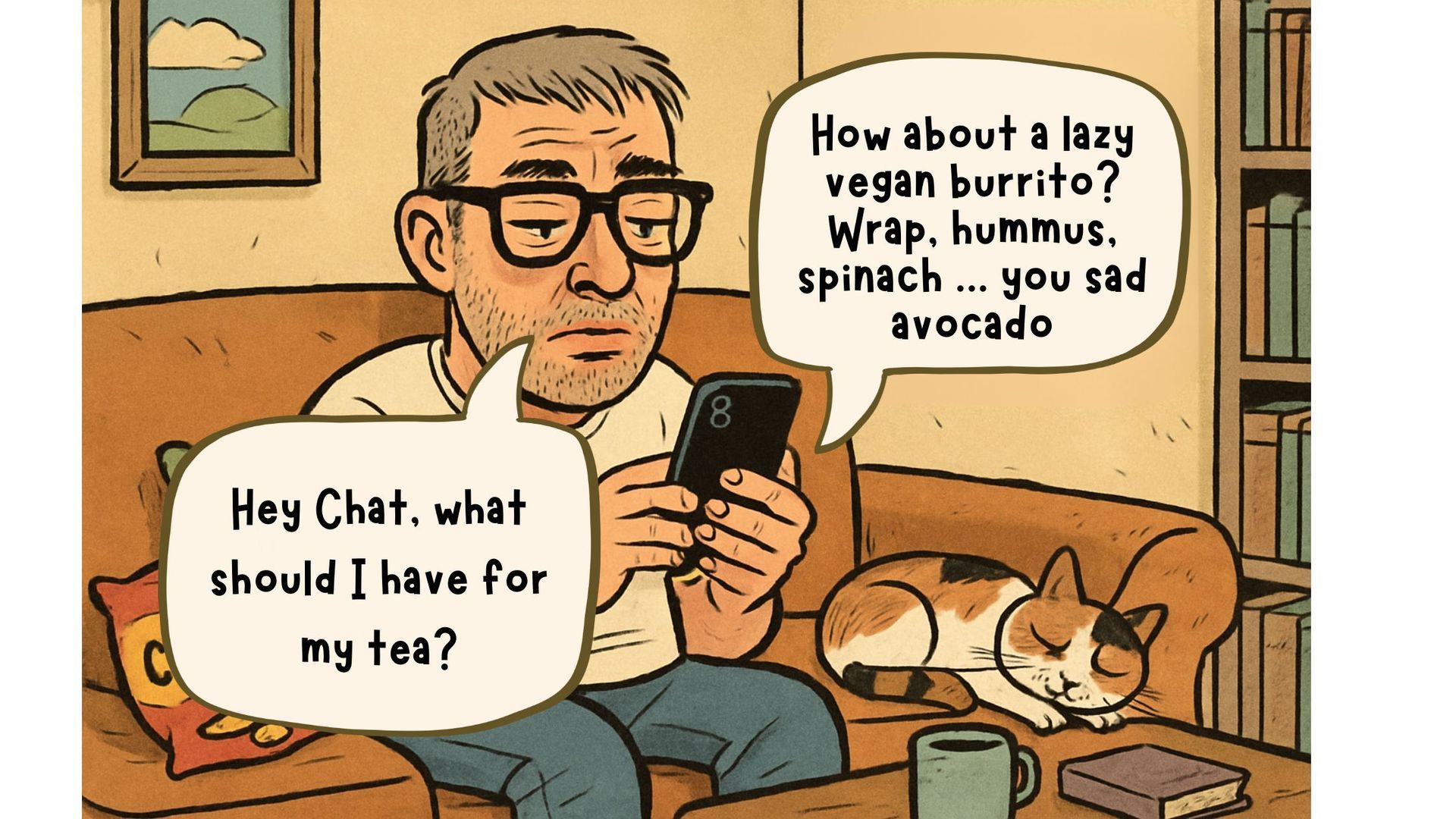
a middle aged man sits on a sofa asking his phone what to have for his tea
By Danny James August 7, 2025
Please and Thank You, GPT: How AI is rewiring the Web - and us “I know it’s silly, but I always say please and thank you - just in case.” It’s something I’ve heard a lot of people say lately. And it tells you something strange but important about the way we’re using AI. We’re not just searching or instructing anymore. We’re chatting. And that’s a very different relationship. It's no accident it's called ChatGPT - not SearchGPT, AskGPT, or CommandGPT. That word chat does a lot of work. It sets the tone. It encourages conversation. It makes us feel like we’re talking to something… maybe even someone. And that shift is quietly changing everything - from how we search for local services, to how we build websites, to what we expect from the internet as a whole. From keywords to conversations Take the old way: you’d search “carpenter near me” and scroll through directories, ads, maybe a few reviews. Now? You open ChatGPT and say: “I’m planning a full bedroom refit. I want something more modern than what I’ve got now - maybe with oak, but not too dark. I saw a wardrobe I liked on Instagram, and I’d love to find someone local who can make something similar.” That’s not a search - it’s a conversation. A little backstory. A bit of personality. And the result you get back? It feels more like a recommendation from a helpful mate than a cold list of links. This conversational shift has big implications - not just for how we use AI, but how we write for the web. The rise of the chatty web If people are asking AI questions in a natural, chatty tone … shouldn’t websites respond in kind? We might be entering a new era of content - one where the best-performing copy isn’t stuffed with keywords, but flows like a friendly explanation. Less like an advert, more like your local Facebook group (minus the angry rants about bins or potholes). That could be great news for small businesses, creatives, and community-focused brands. If you can speak your audience’s language - literally - you’re more likely to be picked up, surfaced, and trusted by AI tools that are built to favour helpful, human-sounding content. AI, ads, and trust Here’s another interesting shift: trust. When you Google something, the top results are often ads. Most people know this - and skip them. But when an AI gives you an answer, especially one backed up by links or citations, it feels different. It feels considered. Curated. Helpful. Even if it’s technically summarising the same content, the delivery feels more like advice than sales. This could lead to a world where fewer people click on ads - and where getting noticed depends less on how much you spend, and more on how well you communicate. That’s a challenge, but also an opportunity for anyone writing web content today. What’s the point of a website now? If AI can answer questions before a user ever clicks your site, what’s your website for? Think of it like this: your site might not be the first interaction - but it’s where people go to confirm they’ve made the right choice. It becomes a place to build confidence, show credibility, and reassure the user that yes, they’re in the right place. That means the tone matters ... Pushy sales copy? Out. Clear, friendly, helpful content that feels like a human? Very much in. One last thought… Let’s zoom out for a moment. All of this - smarter AI, better answers, less repetitive work - could mean major shifts in how we live and work. Yes, some jobs might go. Yes, some industries will change. But maybe, just maybe, that’s not such a bad thing. If AI can take on the boring, repetitive, soul-sapping work, what could we do with the time it frees up? Solve real problems? Be more creative? Rebuild some of what we’ve lost—nature, community, joy? That might sound a bit Star Trek. But who says that’s a bad thing? What do you think? Have you changed how you search online? Are you writing or planning content differently now? And are you secretly saying “thank you” to ChatGPT, just in case? Need help making your website sound more human - and stand out in a world of AI summaries and SEO overload? At Head On Creative , we write and design for real people first (with an eye on the algorithms). Whether you need a brand refresh, blog support, or a full site rethink, we’ll help you speak your customers’ language- before the robots beat you to it.
A person is sitting at a table with a laptop and a cup of coffee.
By Danny James June 30, 2024
If you're interested in building a website, you've no doubt come across a sea of new AI, build-your-site-in-seconds ads. So you're probably wondering, 'Do I even need someone to design my website for me now?' That's a reasonable question, as these ads are very compelling, so lets take a look.. Embracing Technological Advancements In recent years, technology has advanced at a breakneck speed, and artificial intelligence (AI) has been at the forefront of this revolution. AI tools have permeated various aspects of our lives, from personal assistants like Siri and Alexa to advanced algorithms driving our cars and diagnosing medical conditions. One of the most exciting applications of AI is in the realm of website building . AI-powered instant website builder platforms promise to create beautiful, functional websites in mere minutes, requiring minimal input from the user. They offer a seemingly magical solution for small business owners, entrepreneurs, and even hobbyists looking to establish an online presence without the hassle of learning to code or hiring a professional developer. The Creativity Conundrum While AI website builders provide an impressive starting point, they are far from the complete solution. As technology evolves, a concerning trend has emerged: websites generated by these platforms often look and read very similarly. This uniformity is a direct consequence of the templates and pre-written content these tools rely on. For small businesses, having a unique voice and personalised content is crucial. AI-generated copy, although grammatically correct and coherent, can lack the nuanced touch that truly represents a brand's personality and values. Small businesses thrive on their ability to connect with their community and customers in a genuine, human way. A bespoke website , crafted with careful attention to the business's unique voice and style, can make a significant difference in standing out in a crowded digital marketplace. The Hidden Cost of Code Bloat Another critical issue with AI-generated websites is the hidden inefficiency in their underlying code. These platforms often prioritize ease of use and rapid deployment over code optimization. The result is code bloat – an excess of unnecessary or redundant code that can slow down website performance. Slow loading times can frustrate users and negatively impact search engine rankings, driving potential customers away before they even have a chance to explore what the business has to offer. In contrast, a bespoke website, designed and developed specifically for a business's needs, can be finely tuned for performance. It ensures that every element serves a purpose, contributing to a smooth and efficient user journey. This focus on optimisation can enhance user experience, improve engagement, and ultimately lead to better business outcomes. Conclusion: Striking the Right Balance As we look to the future, it's clear that technology will continue to play a pivotal role in shaping our lives and businesses. AI tools, including instant website builders, are valuable assets that can save time and simplify complex tasks. However, they should be viewed as tools – helpful aids in the hands of skilled professionals, not replacements for human creativity and expertise. We are not yet in a world where we can sit back and let robots handle all our tasks, freeing us for endless leisure. Instead, we must strive to use technology wisely, balancing automation with the irreplaceable value of human insight and creativity. The robots may not be arriving from the future with mechanical minds set on our destruction, but neither are they ready to run our businesses for us. By leveraging AI as a supportive tool rather than a crutch, we can create vibrant, unique online presences that truly represent our businesses and connect with our audiences in meaningful ways. Looking for a beautiful new website that will get you leads? Get in touch today
A woman is sitting on the floor using a laptop computer.
By Danny James July 24, 2022
When it comes to SEO , there isn't a magic formula to instantly send your site off to the #1 search result on Google. But there are some basic principles you should follow for a wonderful starting point. Here are the top 5 SEO practices to start with: #1 Write for people, not for search engines Always write original, interesting, high quality site content that's error free and relevant to your site. Search engines like Google can easily detect content that is duplicated from elsewhere online, that contains grammatical errors, or that is stuffed with keywords. #2 Add a blog to your site and use rich media To engage your site visitors and blog readers, create posts that include non-textual media like photos, videos, or original visualizations (infographics). Having that extra content (especially if it's captivating) will increase the time users spend on your site as well as the likelihood they will share your site with their own community. #3 Offer a positive user experience throughout your site Google will know if you're using your site to aggressively advertise your service, or if you're being too pushy. Always aim to offer site visitors a pleasant experience on your site. That means clear content, support when needed, and always an option to go back. #4 Create a network of internal links (but don't overdo it) Add links between different pages of your site and your blog, but try to follow a process that feels organic rather than heavy linking meant just for search engine crawlers. Link between pages that make sense, for example, on your services page, link a certain industry specific term, and link it to a blog post you wrote about it, that gives more information on that term. #5 Always check your site's Core Web Vitals Core Web Vitals are a standard site performance standard initially created by Google. The report shows site owners how their site pages perform 'for real,' how long it takes for site visitors to load site pages, and it offers ways to fix issues, if there are any. Need an expert to review your site and give you a plan for ongoing organic traffic growth? Get in touch
Three bottles of the ordinary cosmetics are sitting on a table surrounded by pink petals.
By Danny James June 29, 2022
Branding makes a huge impact on how you're seen as a business, it can evoke emotion, create a mental image of who you are and consistent and correct use can see you gain an advantage over your competitors with just organic reach. Why SEO Loves Branding: The Power of Consistency in Building Online Success The Symbiotic Relationship Between SEO and Branding In the ever-evolving digital landscape, search engine optimization (SEO) and branding often get treated as separate entities. However, savvy marketers know that these two components are intrinsically linked, each bolstering the other in powerful ways. SEO focuses on making your website visible to search engines and, by extension, potential customers. Branding, on the other hand, is all about creating a distinct identity that resonates with your audience. When these two elements work together harmoniously, the results can be extraordinary. Strong branding not only enhances your SEO efforts but also ensures that your message cuts through the noise, fostering a loyal and engaged audience. The Importance of Consistency Consistency is the cornerstone of effective branding. When your brand's message, tone, and visual identity are uniform across all platforms, it creates a cohesive and memorable experience for your audience. This consistency is crucial not just for brand recognition, but for SEO as well. Search engines favor websites that offer a seamless user experience, and a consistent brand presence is a key component of this. Whether a potential customer encounters your brand on your website, through social media, or via email marketing, the experience should be unmistakably you. This uniformity helps in establishing trust and credibility, making visitors more likely to return and engage with your content, thereby boosting your site's ranking in search engine results. The Role of Branding in User Engagement A strong brand encourages user engagement, which is a critical factor in SEO . When users spend more time on your site, interact with your content, and share it with others, search engines take notice. These behaviors signal that your site provides valuable information, leading to higher rankings. Consistent branding helps in creating a recognizable and relatable identity that keeps visitors coming back. It's not just about having a logo or a catchy tagline; it's about the overall experience your brand offers. High-quality content that aligns with your brand’s voice, regular updates, and active social media presence all contribute to a more engaged and loyal audience. This loyalty translates into lower bounce rates, higher dwell times, and more inbound links – all of which are music to the ears of any search engine algorithm. Building a Strong Connection Through Messaging Your brand's messaging is the narrative that ties everything together. It's how you communicate your values, your mission, and what sets you apart from the competition. This narrative needs to be consistent across all touchpoints. When your messaging is aligned, it reinforces your brand’s identity and makes it easier for customers to understand and connect with you. This connection is essential for creating a strong brand recall, which in turn supports your SEO efforts. Think about it: if a user remembers your brand and searches for it directly, that’s a clear signal to search engines that your brand is reputable and relevant. This direct traffic can significantly boost your site’s authority and improve its ranking. Conclusion: The Path to Digital Success In the digital age, the symbiosis between SEO and branding cannot be overstated. Consistent branding across your website, social media, and other platforms creates a unified and memorable experience that keeps your audience coming back. This repeat engagement not only strengthens the connection between your brand and your customers but also sends positive signals to search engines, enhancing your site’s ranking. As technology continues to evolve, maintaining a strong, consistent brand presence will be key to standing out in a crowded marketplace. By integrating your SEO strategies with a robust branding approach, you can create a powerful online presence that drives traffic, fosters loyalty, and ultimately, achieves digital success. So, remember: while SEO may be the science of being found, branding is the art of being remembered. Together, they can elevate your business to new heights. Need some help with digital marketing or SEO to boost your online presence? Get in touch today